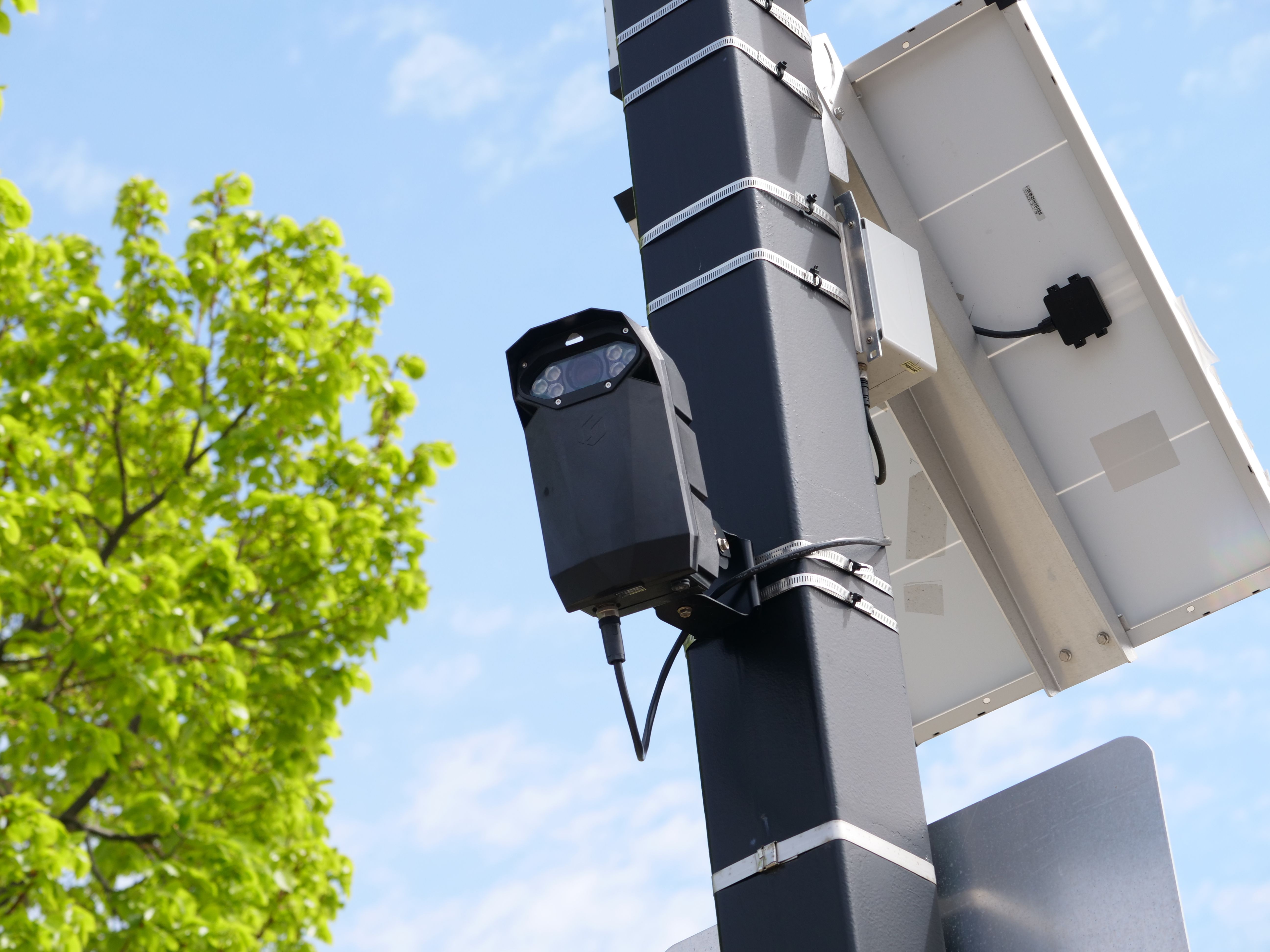
Both candidates for Ohio attorney general said Aug. 12 that the state needs legislation governing Flock license-plate-reader cameras, a bipartisan call that could reshape how Dublin and other cities operate the surveillance systems.
State Auditor Keith Faber, the Republican candidate, and Upper Arlington attorney John Kulewicz, the Democrat, made their positions public in interviews with NBC4. Their statements came two days after Columbus City Council held a public hearing on Flock and amid revelations that two Reynoldsburg officers resigned over alleged personal misuse of the cameras.
"If you put it in the code, it is certainly more firm than if you just ask departments to have interdepartmental rules," Faber told NBC4.
Dublin operates 25 Flock cameras that scan every passing vehicle's plate in real time against hotlists for stolen cars, missing persons and wanted suspects. As we reported Aug. 5, Police Chief Justin Páez's department has logged 135 investigative successes since deploying the system in spring 2024, bars ICE and DHS from accessing the data, and individually approves each agency before sharing.
Those protections are department policy. No Ohio law requires them.
That gap is what both AG candidates want to close. Faber said relying on individual departments' internal rules is "a little soft" and pledged to work with the legislature to codify controls. He drew a line between using Flock to find a specific car at a specific time and building a "mosaic" of someone's movements, which he said should require a warrant.
Kulewicz said he would prefer one statewide standard over "hundreds of different standards" and would convene a task force if the General Assembly has not acted by the time he takes office. He also said he would be comfortable restricting Flock data access to state and local law enforcement, effectively barring federal agencies.
Why it matters locally
Dublin's written policy already bars selling data, using it for immigration enforcement, or targeting people based on race or religion. The department conducted 164 investigative searches in a single recent month and generated about 2,300 hotlist alerts, according to Dublin Ohio Daily. Data is automatically deleted after 30 days.
But the Reynoldsburg case illustrates the enforcement gap. One officer there allegedly tracked a former domestic partner's plate more than 50 times over six months. Because no Ohio statute specifically criminalizes Flock misuse, the officers faced only policy violations and resigned. By contrast, misusing the statewide Law Enforcement Automated Data System is a felony.
In Columbus, a July 2026 audit found more than 15,000 possibly immigration-related searches of city Flock data since 2024, according to the Columbus Dispatch. Mayor Andrew Ginther pulled back on statewide data sharing after the audit.
Dublin officials confirmed the city can view data from three federal agencies (Wright-Patterson Air Force Base police, the U.S. Postal Inspection Service and Tennessee Valley Authority Police) but no federal agency has access to Dublin-operated cameras.
What comes next
Gov. Mike DeWine defended Flock on Aug. 11, saying misuse of a law enforcement tool does not make the tool ineffective and comparing it to improper record checks already illegal under state law. Current Attorney General Andy Wilson also backed the technology.
No bill has been introduced in the Ohio General Assembly, and no hearing is scheduled. Whether Dublin's local safeguards would satisfy a future state standard remains an open question. The Dublin Police Department has not publicly responded to the AG candidates' call for legislation.